Quick answer: A dress shoe should hold the heel without pinching the back of the foot. The widest part of the foot should sit at the shoe's widest point, while the instep feels secure rather than compressed. Your toes need enough height and width to lie naturally instead of being pushed together.
Heel, ball, instep and toe-box checkpoints
A dress shoe should hold the heel without pinching the back of the foot. The widest part of the foot should sit at the shoe's widest point, while the instep feels secure rather than compressed. Your toes need enough height and width to lie naturally instead of being pushed together.
Judge all four areas together. A shoe can have ample toe length yet still be too narrow at the ball, or it can feel soft underfoot while the heel lifts on every step. Localized pressure, numbness, burning, or a foot that spills over the welt are fit problems, not normal break-in sensations.
Where the shoe should flex
The main flex line should form beneath the ball of the foot, where the toes naturally bend during a step. If the shoe buckles far behind that point, it is often too long or the last does not match the wearer's foot. Flexing ahead of the toe joints can make walking stiff and create awkward creasing.
Test the flex point by taking several normal steps rather than bending the shoe by hand. Watch where the upper folds and notice whether the heel remains seated as the forefoot rolls forward. A well-placed flex feels coordinated; it should not force the arch to fight the shoe.
Normal heel movement versus true slip
A small amount of heel movement can occur in a new leather-soled shoe because the sole is initially stiff. That movement should be slight and should diminish as the sole begins to flex. The heel should not climb high enough to rub aggressively, pull off a thin sock, or make the wearer curl the toes to keep the shoe on.
True slip often persists even when the laces are snug and usually points to excess length, excess heel volume, or an incompatible last. Do not solve major movement by over-tightening the laces; that trades heel instability for instep pain. Compare a half size and, when offered, an alternate width.
Fit testing late in the day
Feet commonly become a little fuller after hours of standing and walking, so an evening fitting gives a more realistic picture of all-day comfort. Wear the sock thickness intended for the shoe and measure both feet before trying a new size. Fit the larger foot, then confirm that the smaller one remains acceptably secure.
Walk indoors for at least fifteen to twenty minutes during the return period. Use stairs if possible and pause to notice pressure at the little toe, big-toe joint, instep, and heel. A shoe that is already painfully tight late in the day is unlikely to become correctly shaped through wear.
How lasts differ from sneaker sizing
Sneaker size is only a starting reference because dress shoes are built on lasts with different toe shapes, heel widths, instep heights, and internal volumes. Two shoes carrying the same printed size can fit very differently. A long pointed toe also contains decorative space that should not be treated as usable toe room.
Start with the brand's size chart and any width guidance attached to the exact model. Then evaluate the shoe on foot rather than choosing a smaller size merely because the toe looks long. People between widths often get a better result by changing width or last instead of changing length.
Return-window home walking protocol
Keep the soles spotless and walk only on clean carpet or another approved indoor surface. Try the shoes with work trousers as well as the correct socks, because trouser weight and sock thickness can alter how the fit feels. Lace both shoes normally and repeat the test at two different times of day.
Record where discomfort begins and whether it fades when standing still. General stiffness may ease, but sharp pressure and tingling are reasons to stop. Before the return window ends, compare the current pair with one adjacent size or width if any checkpoint remains uncertain.
CURRENT AMAZON OPTIONS
Use these as relevant comparison points.
As an Amazon Associate, we earn from qualifying purchases. Amazon links open the exact listing so you can confirm current size, color, price, and availability.

Rockport · Black
Rockport Margin Oxford
A practical plain-toe option for shoppers who prioritize familiar fit and subdued styling.
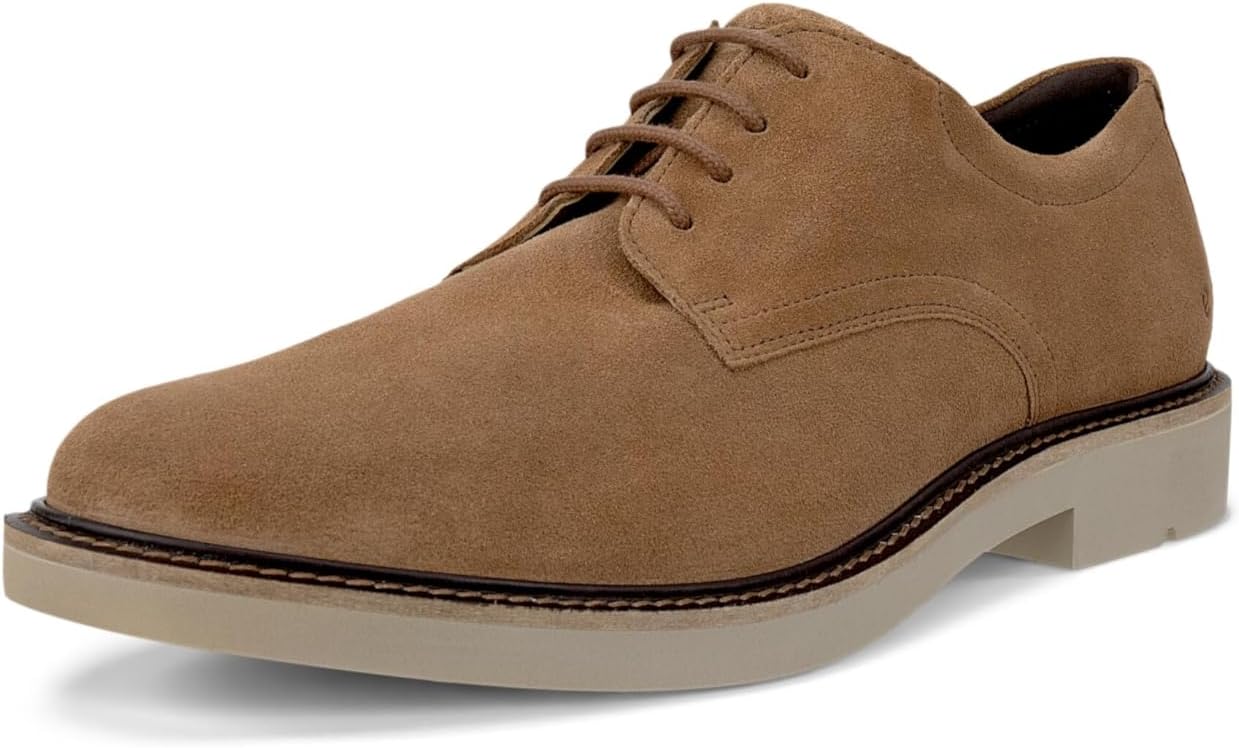
ECCO · Black
ECCO London Plain-Toe Derby
A round-toe derby profile with a removable dual-fit insole on the Amazon listing.

Clarks · Dark tan leather
Clarks Tilden Cap Oxford
A classic cap-toe lace-up offered by Amazon in regular and wide sizing.

Rockport · New Brown Gradient
Rockport Style Leader 2 Bike Slip-On
A Style Leader 2 slip-on loafer presented by Amazon with a bike-toe profile and comfort-oriented sole.
QUICK ANSWERS
Questions shoppers ask next.
How much room should be in the toe of dress shoes?
Leave enough room for the toes to lie flat and move slightly without touching the front during a normal step. A thumb-width rule is unreliable because elongated dress-shoe toes include decorative space; ball alignment and toe-box width matter more than a single front measurement.
Should dress shoes feel tight at first?
They may feel firm and structured, but they should not cause pinching, numbness, burning, or joint pressure. Leather can relax modestly in width, yet the shoe will not gain meaningful length or correct a badly placed flex point.
Is heel slip normal in new dress shoes?
Slight movement can be normal while a stiff sole begins to flex. Large, persistent lift that causes rubbing or forces you to grip with your toes usually signals excess length, heel volume, or the wrong last.
How can you tell if dress shoes are too narrow?
Warning signs include pressure at the little-toe joint, bulging over the welt, numb toes, a squeezed forefoot, or eyelets that must be pulled unusually wide or tight. Test late in the day and compare a true wider width rather than simply adding length.