Quick answer: An Oxford has closed lacing: the eyelet facings are stitched beneath the vamp and draw together into a neat V. A Derby has open lacing: its eyelet quarters sit on top of the vamp and can spread farther apart. That structural distinction, not the toe decoration, determines the category.
The direct answer for Oxford vs Derby: What Is the Lacing Difference
An Oxford has closed lacing: the eyelet facings are stitched beneath the vamp and draw together into a neat V. A Derby has open lacing: its eyelet quarters sit on top of the vamp and can spread farther apart. That structural distinction, not the toe decoration, determines the category.
Closed lacing usually produces a cleaner, more formal line, while open lacing allows more adjustment and looks slightly more relaxed. Either shoe can be plain-toe, cap-toe, or brogued, so product titles that call every lace-up an Oxford should be checked against the actual construction.
How closed facings changes the decision
Closed facings give an Oxford its uninterrupted silhouette, which works especially well with formal suits and conservative office clothing. When the last suits the foot, the two facings approach one another evenly without overlapping or opening into an extreme V.
The same construction offers less room for a high instep. If the facings remain widely separated and press down across the top of the foot, increasing length is rarely the best answer. A roomier Oxford last or an open-laced Derby is usually the more comfortable choice.
How open quarters changes the decision
A Derby's quarters pivot outward when the laces are loosened, creating a larger opening and more usable adjustment over the instep. This makes the style practical for higher-volume feet and for people whose feet swell during long workdays.
Open quarters also add a visible seam and slightly more visual weight. A sleek black Derby with a thin sole can still accompany a suit, while a chunky brown version with heavy broguing belongs closer to business casual. Construction sets the baseline; leather, color, and sole refine the result.
How adjustability changes the decision
Choose adjustability according to the actual foot rather than assuming one style is universally more comfortable. A low-volume foot may feel securely held in an Oxford, whereas a prominent instep may benefit from the Derby's wider opening. Width at the ball still depends on the last and offered width sizes.
During a home fitting, loosen and relace the shoe from the bottom before judging. The quarters should lie smoothly, the tongue should remain centered, and snug laces should not create a pressure ridge. If stability requires crushing the instep, the model's volume is wrong.
How and formality changes the decision
For black tie and the most traditional formal settings, a plain or cap-toe black Oxford remains the safest lace-up. In ordinary offices, weddings, and dinners, a refined Derby is often entirely appropriate. The difference is a matter of degree rather than a rule that makes Derbies informal.
Look at the whole shoe. Smooth dark leather, minimal ornament, a narrow welt, and a restrained sole raise formality; suede, contrast stitching, broad welts, and rugged rubber lower it. A decorated Oxford can therefore look less formal than a plain black Derby.
Common mistakes to avoid with Oxford vs Derby: What Is the Lacing Difference
The most common mistake is identifying the shoe by its toe. Wingtips and cap toes describe decoration, not lacing construction, and both can appear on either an Oxford or a Derby. Inspect how the eyelet pieces join the vamp before relying on a retailer's title.
Another mistake is forcing a closed-laced shoe onto a high instep for the sake of formality. A poorly fitting Oxford will look strained and feel worse than a well-proportioned Derby. Fit, leather finish, and condition influence the final impression more than category purity.
A practical before-you-buy checklist
Confirm whether the facings are closed or open, then match the construction to the intended dress code. Check available widths, the shape of the last, sole thickness, leather finish, and the amount of broguing. Product photos from above are especially useful for seeing the lacing structure.
Try the pair with the trousers it will serve. Make sure the instep is comfortable, the heel stays controlled, and the flex line meets the ball of the foot. If two models fit equally well, choose the Oxford for greater formality and the Derby for broader adjustment and casual range.
CURRENT AMAZON OPTIONS
Use these as relevant comparison points.
As an Amazon Associate, we earn from qualifying purchases. Amazon links open the exact listing so you can confirm current size, color, price, and availability.
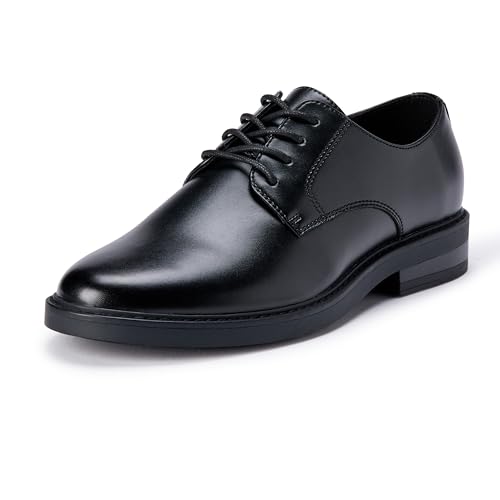
Amazon Essentials · Black
Amazon Essentials Men's Round-Toe Derby Dress Shoes
Open-lacing round-toe derby with an active-response foam cushioned insole.

Amazon Essentials · Black
Amazon Essentials Men's Wingtip Derby Dress Shoes
Classic brogued wingtip derby with cushioning and a rubber sole.
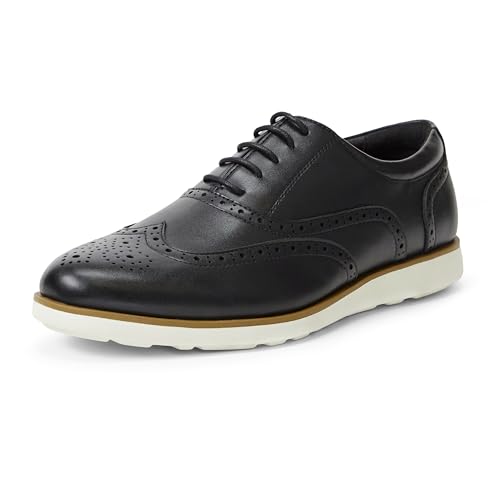
Amazon Essentials · Black
Amazon Essentials Men's Wingtip Derby Dress Sneakers
Hybrid wingtip derby that pairs dress-shoe detailing with a sneaker-style sole.
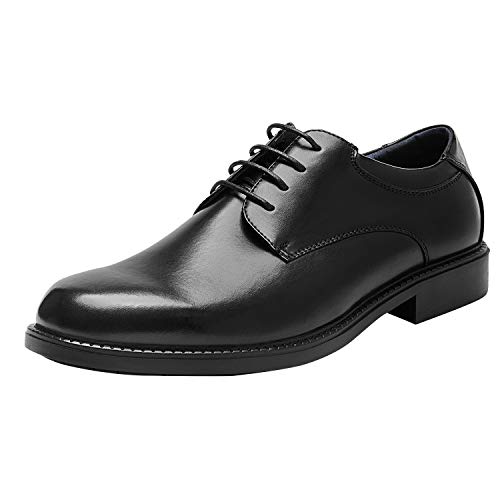
Bruno Marc · Black
Bruno Marc Men's Business Derby Lace-Up Shoes
Classic open-lacing derby with a cushioned latex insole and TPR outsole.
QUICK ANSWERS
Questions shoppers ask next.
What is the first thing to check for oxford vs derby: what is the lacing difference?
Look at the eyelet facings. Oxfords have facings stitched under the vamp in a closed system; Derbies have quarters laid over the vamp in an open system that can spread farther apart.
Which common mistake changes the Oxford vs Derby: What Is the Lacing Difference decision most often?
Shoppers often mistake toe decoration for shoe construction. A wingtip or cap toe can be either an Oxford or a Derby, so the lacing attachment must be identified separately.
How can you confirm closed facings for “Oxford vs Derby: What Is the Lacing Difference” before the return window closes?
View the shoe from above and check that the eyelet pieces are sewn beneath the vamp. On foot, they should approach each other evenly without a painfully wide V or heavy pressure across the instep.
What nearby styles choice should you compare while deciding “Oxford vs Derby: What Is the Lacing Difference”?
Compare a plain cap-toe Oxford with a sleek plain-toe Derby in the same color. That isolates the effect of the lacing system without letting broguing, suede, or a heavy sole dominate the comparison.