Quick answer: Bookbinder leather usually begins as corrected leather covered with a smooth resin or plastic-like finish. The coating creates an even color and shine while concealing much of the natural grain.
Coated-leather construction
Bookbinder leather usually begins as corrected leather covered with a smooth resin or plastic-like finish. The coating creates an even color and shine while concealing much of the natural grain.
Usage varies among brands, so confirm the model's description rather than assuming every high-gloss non-patent shoe is bookbinder. The amount and flexibility of coating determine how it behaves.
High shine and water resistance
The sealed surface can shrug off light splashes and polish quickly with minimal product, making it practical for occasional formal wear or unpredictable weather. Its uniform gloss also photographs cleanly.
Water resistance is not waterproofing. Moisture can enter through seams, welts and the opening, and prolonged wet exposure can damage the upper or internal components.
Creasing, cracking and repair limitations
Because the coating bends with the leather, repeated flexing can produce sharp creases and eventually fine cracks. A poor flex-point match increases stress by folding the upper in the wrong place.
Conditioner may not penetrate a sealed surface effectively, and polish cannot rebuild missing coating. Once cracking begins, cosmetic repair is limited compared with refinishing an open leather surface.
Bookbinder versus patent leather
Both use coated surfaces, but patent leather is intentionally finished to a mirror-like gloss associated with formal evening wear. Bookbinder finishes range from moderate shine to very glossy.
Care products should follow the manufacturer's material description. Treating either like ordinary calfskin can leave smears or residue on the coating.
When the finish makes practical sense
Bookbinder can work for a wearer who values easy wiping, consistent color and occasional use over deep patina. It also offers a polished look without repeated wax applications.
It is less appealing for someone seeking gradual character, easy refinishing or decades of upper restoration. The decision is a tradeoff, not proof that the shoe is universally poor.
Care products to avoid
Avoid soaking the surface with conditioner, using harsh solvents or scrubbing with abrasives. Strong cleaners can cloud the finish and excess product can sit tackily on top.
Use a soft cloth, minimal water and a coating-compatible product after testing. Store away from heat, which can accelerate brittleness and separation.
CURRENT AMAZON OPTIONS
Use these as relevant comparison points.
As an Amazon Associate, we earn from qualifying purchases. Amazon links open the exact listing so you can confirm current size, color, price, and availability.

Stacy Adams · Black
Stacy Adams Dickinson Cap-Toe Oxford
A traditional cap-toe Oxford with a clean, formal profile and practical budget positioning.

Jousen · Black
Jousen Patent Tuxedo Oxford
A high-shine lace-up reserved for tuxedos and deliberately formal evening dress.
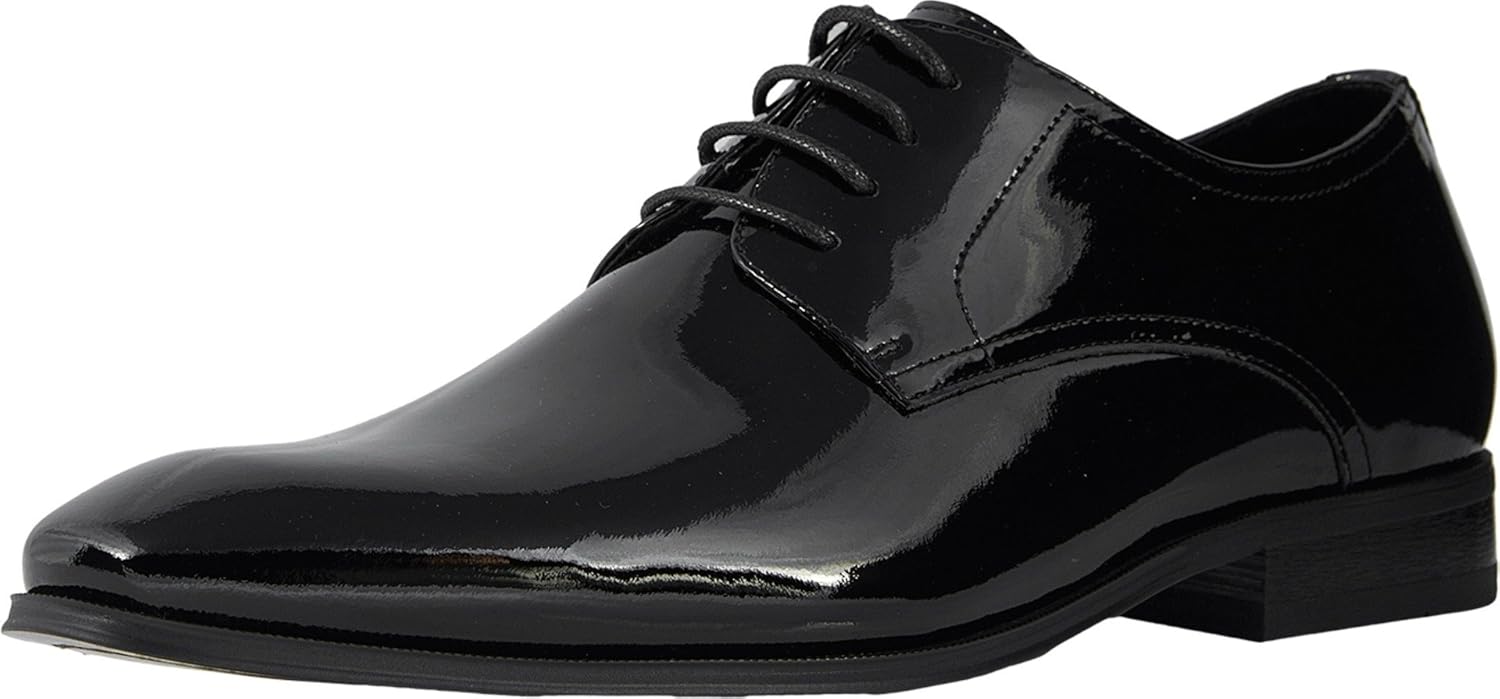
Florsheim · Black
Florsheim Tux Plain-Toe Oxford
A streamlined patent-leather Oxford with a plain toe and a cushioned footbed for special occasions.

Jousen · Black
Jousen Men's Patent Tuxedo Oxford Shoes
High-shine lace-up designed for tuxedo and formal-event outfits.
QUICK ANSWERS
Questions shoppers ask next.
Is bookbinder leather real leather?
Usually yes: it is commonly corrected leather beneath a substantial surface coating. The coating changes how the upper looks, ages and accepts care products.
Does bookbinder leather crack?
It can. Repeated flexing, heat, age and a misplaced flex point can crack the coating. Some formulations are more flexible than others, so model quality matters.
Can bookbinder leather be polished?
It can be wiped and shined with a product approved for coated leather, but ordinary cream may not penetrate and heavy wax can smear. Follow the maker's instructions.
Is bookbinder the same as patent leather?
No, although both are coated. Patent is defined by its very high gloss, while bookbinder describes a corrected and coated finish that may be less mirror-like.