Quick answer: Smooth leather dress shoes can usually tolerate a brief walk through light rain if they are maintained and dried correctly afterward. That does not make them waterproof. Water can still enter around seams, the welt area, eyelets, and the opening around the ankle.
Light rain versus soaking conditions
Smooth leather dress shoes can usually tolerate a brief walk through light rain if they are maintained and dried correctly afterward. That does not make them waterproof. Water can still enter around seams, the welt area, eyelets, and the opening around the ankle.
A sustained downpour, flooded curb, or repeated wet commute creates a different risk. Saturated leather may stiffen, lose finish, or dry into distorted creases. When severe weather is forecast, overshoes or a weather-oriented alternate pair protect both the shoe and the wearer more reliably than conditioner alone.
Smooth leather, suede and patent differences
Finished smooth leather is the easiest dress-shoe upper to wipe down after a shower. Cream polish and appropriate conditioner can help maintain the surface, but neither seals every entry point. Light-colored leather may show water marks more readily than black.
Suede and nubuck can darken or develop rings when wet, and brushing must wait until the nap dries. Patent sheds surface droplets well, yet water can reach seams and prolonged damp storage can damage its coating. Treat each material according to its confirmed upper, not a generic leather-care routine.
Rubber versus leather outsole traction
A treaded rubber outsole generally offers more grip than a smooth leather sole on wet tile, painted crosswalks, metal grates, and polished stone. Compound and tread depth matter; a flat fashion rubber sole can still become slick.
Leather soles absorb moisture at the edges and often need roughening before they gain modest traction. They remain an elegant indoor choice but require deliberate steps in rain. Combination soles and professionally applied rubber protectors can preserve a dressy profile while improving grip.
Pre-wear protection without waterproof claims
Brush away dust before applying any protector, then patch-test beneath the arch or near the heel. Products may darken suede, change shine, or react with coated leather. Follow ventilation, drying-time, and reapplication directions on the specific treatment.
Words such as water resistant should not be stretched into waterproof. Spray cannot close an open ankle, repair loose stitching, or transform a leather sole. Protection buys time for light exposure; it does not turn a formal shoe into a rain boot.
Drying routine after exposure
Blot standing water, remove the laces, and open the tongue so air reaches the lining. Stuff the shoe loosely with plain absorbent paper, replacing it when damp. Dry at normal room temperature with space around the pair.
Avoid hair dryers, radiators, ovens, and direct sun because rapid heat can shrink or crack leather. Insert correctly sized shoe trees once the pair is no longer saturated. Condition smooth leather only after it is completely dry and feels in need of replenishment.
When a weather-focused alternate pair is smarter
Choose a rubber-soled or explicitly weather-oriented shoe for a daily outdoor commute, winter slush, or work that moves repeatedly between buildings. Rockport Northfield and similar verified waterproof listings belong in that discussion; ordinary office shoes should not inherit their claims.
A second weather pair can extend the life of better formal footwear and reduce emergency care. Match it to the trousers most often worn in bad weather, then keep the dressier pair at the office when conditions routinely exceed light rain.
CURRENT AMAZON OPTIONS
Use these as relevant comparison points.
As an Amazon Associate, we earn from qualifying purchases. Amazon links open the exact listing so you can confirm current size, color, price, and availability.

Rockport · Black
Rockport Margin Oxford
A practical plain-toe option for shoppers who prioritize familiar fit and subdued styling.

Clarks · Brown
Clarks Jaxen Easy Chelsea Boot
An ankle-height alternative when a low shoe feels too light for the season.

Rockport · Black leather
Rockport Northfield Waterproof Oxford
Amazon describes waterproof construction, cushioning, support and an underfoot air-circulation feature.
Rockport · Black leather
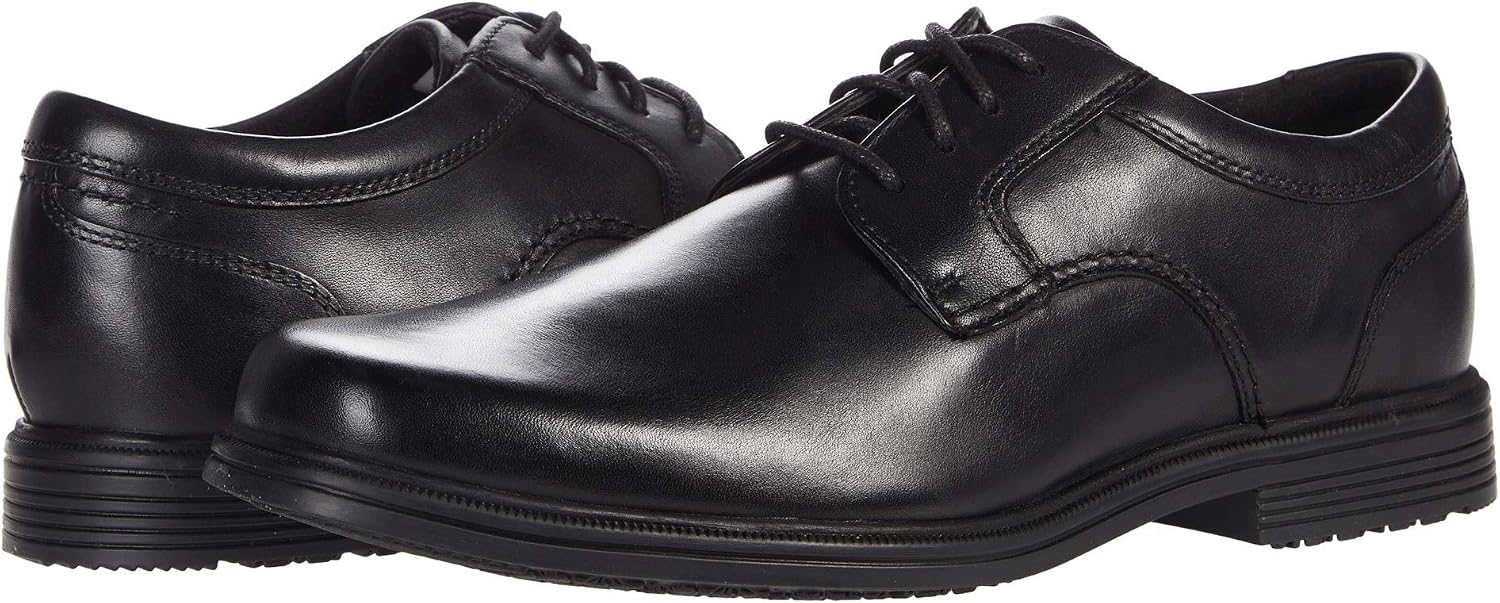
Rockport Taylor Waterproof Plain Toe Oxford
Amazon lists a leather upper, rubber sole, waterproof design and broad regular-to-extra-wide size availability.
QUICK ANSWERS
Questions shoppers ask next.
Does rain ruin leather dress shoes?
A brief shower does not automatically ruin smooth leather, but saturation, salt, heat drying, and poor storage can cause lasting damage. Blot and air-dry the shoes promptly, then assess whether conditioning is needed.
Are rubber soles better in rain?
Usually for traction and water exposure, provided the rubber has useful tread. A smooth rubber fashion sole can still slip, and water may enter through the upper or seams.
Should leather shoes be waterproofed?
Use a material-compatible protector if rain exposure is likely, but call the result protected or water resistant unless the manufacturer explicitly states waterproof. Always patch-test first.
Can suede dress shoes be worn in rain?
A protected suede pair can survive a brief light shower, but steady rain is risky. Let wet suede dry naturally before brushing and choose another shoe when soaking conditions are expected.