Quick answer: Hammertoes need vertical clearance over raised joints as well as enough side-to-side room. A shoe can be labeled wide and still have a shallow toe box that rubs the top of the toe. Check depth while standing, when the foot spreads and the raised joint becomes easier to locate.
Toe height versus toe width
Hammertoes need vertical clearance over raised joints as well as enough side-to-side room. A shoe can be labeled wide and still have a shallow toe box that rubs the top of the toe. Check depth while standing, when the foot spreads and the raised joint becomes easier to locate.
Extra length is not a reliable source of depth because it moves the foot away from the shoe's flex point. Look for a last with generous front volume and a toe cap that does not press down abruptly. The foot should remain secure at the heel so it does not slide into the front.
Round and anatomical toe-box shapes
Round, softly squared, and anatomical toe boxes generally provide more usable space than aggressive points. Exterior shape is only a clue; lining, stiffeners, and taper determine the actual interior. Try the shoe rather than estimating room from a product photo.
A dress shoe can remain polished without a sharply tapered toe. Plain-toe Derbies and selected comfort Oxfords often balance formality with room. The ideal shape lets all toes lie without overlap and avoids contact at the raised joint during walking.
Avoiding seams over raised joints
Cap-toe seams, brogue perforations, and internal reinforcement can create rigid contact directly over a hammertoe. Run a finger inside the upper when possible and note where the joint sits while standing. A smooth vamp with fewer layers is often easier to tolerate.
Decorative stitching that looks harmless outside may correspond to a folded edge or backing inside. Test several minutes of walking because rubbing may not appear while seated. Redness that persists after removal signals a pressure problem rather than normal break-in.
Soft uppers and realistic stretch
Supple leather or soft textile uppers can reduce friction and adapt modestly around a raised toe. Stretch is limited by lining, seams, toe stiffeners, and coatings. Patent and heavily corrected surfaces are usually less forgiving at concentrated pressure points.
Do not buy a painful shoe on the promise that it will stretch enough. A cobbler may spot-stretch suitable leather, but the shoe should begin close to comfortable and retain adequate structure. Medical or diabetic feet require professional guidance before pressure is deliberately applied.
Removable footbeds and depth
Removing a factory footbed can create vertical space and accommodate a prescribed orthotic, provided the interior remains smooth and the replacement does not raise the foot again. Verify removability on the exact variation. Never tear out a permanently attached insole simply to chase more room.
A deeper shoe must still hold the heel and midfoot. Excess overall volume allows forward sliding, which drives the toes into the front. Test the complete insole setup with intended socks and reject any combination that creates new heel instability.
Pressure-test and medical-care red flags
Use clean indoor trials and inspect the skin after several minutes, particularly over raised joints and at the toe tips. Sharp pain, numbness, blistering, persistent redness, or skin breakdown means the shoe should not be worn. A wider label does not make these symptoms acceptable.
People with diabetes, reduced sensation, circulation problems, open sores, or worsening deformity should seek qualified medical or podiatric care. Footwear guidance can reduce obvious friction but cannot diagnose the cause or replace treatment. Bring candidate shoes and orthotics to the appointment when possible.
CURRENT AMAZON OPTIONS
Use these as relevant comparison points.
As an Amazon Associate, we earn from qualifying purchases. Amazon links open the exact listing so you can confirm current size, color, price, and availability.
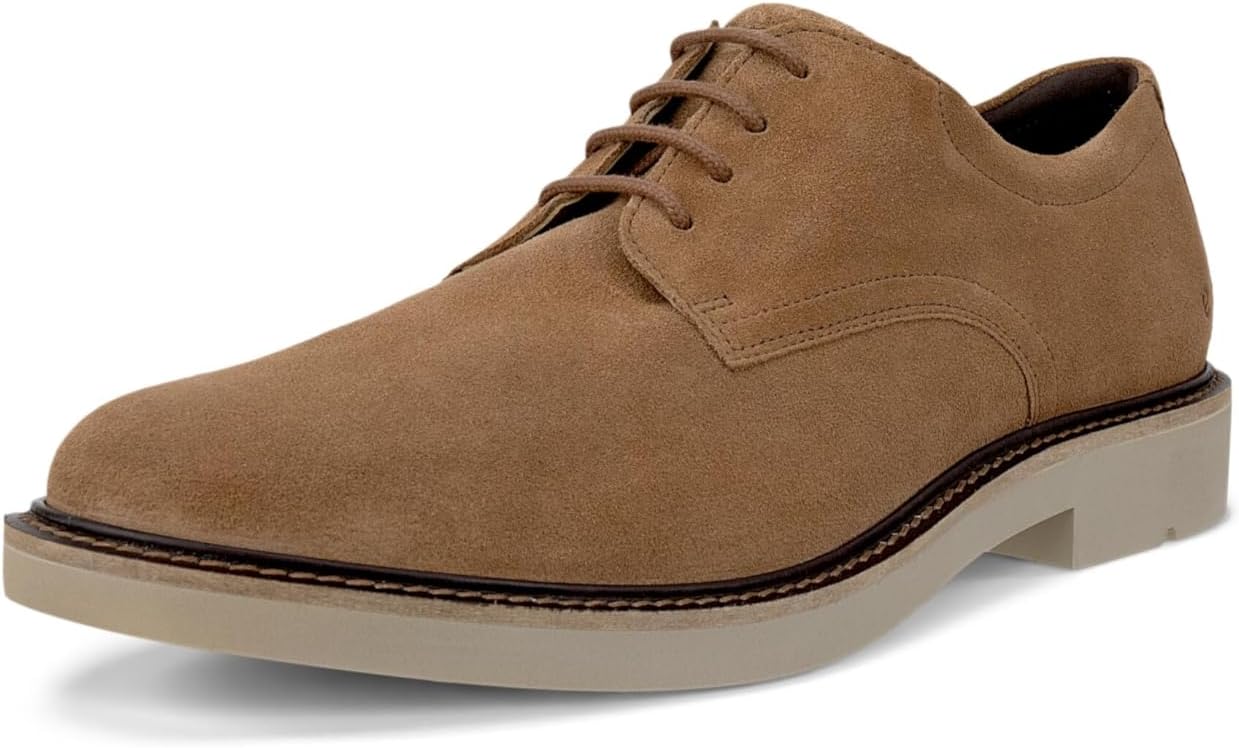
ECCO · Black
ECCO London Plain-Toe Derby
A round-toe derby profile with a removable dual-fit insole on the Amazon listing.

Rockport · Black
Rockport Margin Oxford
A practical plain-toe option for shoppers who prioritize familiar fit and subdued styling.
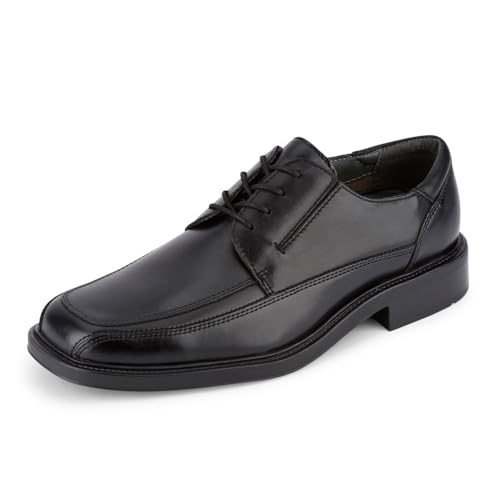
Dockers · Black
Dockers Perspective Leather Dress Oxford
Contemporary leather oxford with an EVA sock liner and gel heel insert.

Bruno Marc · Black
Bruno Marc KnitFlex Breeze
A breathable hybrid that reads polished without pretending to be a formal Oxford.
QUICK ANSWERS
Questions shoppers ask next.
What toe shape is best for hammertoes?
A round, softly squared, or anatomical toe with adequate vertical depth is usually more accommodating than a sharp taper. The interior must be checked because exterior width does not reveal lining and stiffener space.
Should men size up for hammertoes?
Not automatically. Extra length can move the flex point and allow forward sliding without adding useful height over the toes; a deeper toe box or suitable width is the better target.
Can leather dress shoes stretch over hammertoes?
Supple leather may relax slightly, and a cobbler may perform careful spot stretching, but seams, linings, and toe stiffeners limit change. A shoe that begins painfully tight should not be purchased on expected stretch.
Are Derby shoes better for hammertoes?
Derbies can help by opening more widely over the instep, but they do not guarantee toe-box depth. The specific last, seam placement, and front volume remain the deciding features.