Quick answer: High-instep pressure appears across the top of the midfoot, often beneath the tongue or closed lacing. The shoe may fit in length and width yet create a deep lace mark, numbness, or a facings gap that remains wide even when the foot is seated correctly.
How to identify high-instep pressure
High-instep pressure appears across the top of the midfoot, often beneath the tongue or closed lacing. The shoe may fit in length and width yet create a deep lace mark, numbness, or a facings gap that remains wide even when the foot is seated correctly.
Distinguish instep volume from forefoot width. Pressure over the top with comfortable toe joints suggests a volume problem, while side pressure points to width or toe shape. Measuring circumference around the instep can help compare feet, but on-foot testing remains necessary.
Why open lacing helps
Derby quarters can spread farther apart, providing adjustable room over a prominent instep and a wider entry opening. This usually makes open-laced shoes easier to fit than tightly closed Oxfords.
The laces should still hold the foot without cutting in. If the tongue is barely covered or the quarters flare dramatically, the last remains too shallow. Seek a higher-volume model rather than relying on unusually long laces.
Vamp depth in loafers and boots
Loafers offer little closure adjustment, so vamp depth is critical. A shallow strap or low throat can press painfully across a high instep, while an overly deep loafer may slip at the heel. Elastic gores provide only limited relief.
Chelsea and other pull-on boots present the same tradeoff. The opening must admit the foot, and the shaft must hold it after entry. A side zip or lace-up boot is often easier to fit because it separates entry from final adjustment.
Lacing patterns that relieve pressure
Window lacing can bypass the most sensitive eyelets by running the laces vertically along each side before crossing again above the pressure point. Loosening the lower rows slightly can also distribute tension more evenly.
These techniques fine-tune a basically suitable shoe; they do not create substantial depth. The heel must remain controlled, and the tongue should lie flat. If relief requires leaving the shoe unstable, change models.
Why extra length is not the answer
A longer shoe may increase overall volume, but it also shifts the widest point and flex line forward. That can cause heel slip, awkward creasing, and toe gripping while the instep still presses against the same shallow upper.
Keep length aligned with the larger foot and search for a wider or higher-volume last. Some removable-footbed models can offer additional depth, though the replacement setup must preserve heel hold and support.
Return-test checklist for instep comfort
Try the shoes late in the day, relace them from the bottom, and walk indoors for at least fifteen minutes. Look for numbness, a deep tongue edge, eyelet pressure, and a strained opening. Test sitting and stairs because foot angle changes instep contact.
Compare an open-laced model or another last before wearing outdoors. Mild upper firmness may soften, but concentrated pressure should not be accepted. Preserve the packaging and clean soles until the fit is settled.
CURRENT AMAZON OPTIONS
Use these as relevant comparison points.
As an Amazon Associate, we earn from qualifying purchases. Amazon links open the exact listing so you can confirm current size, color, price, and availability.
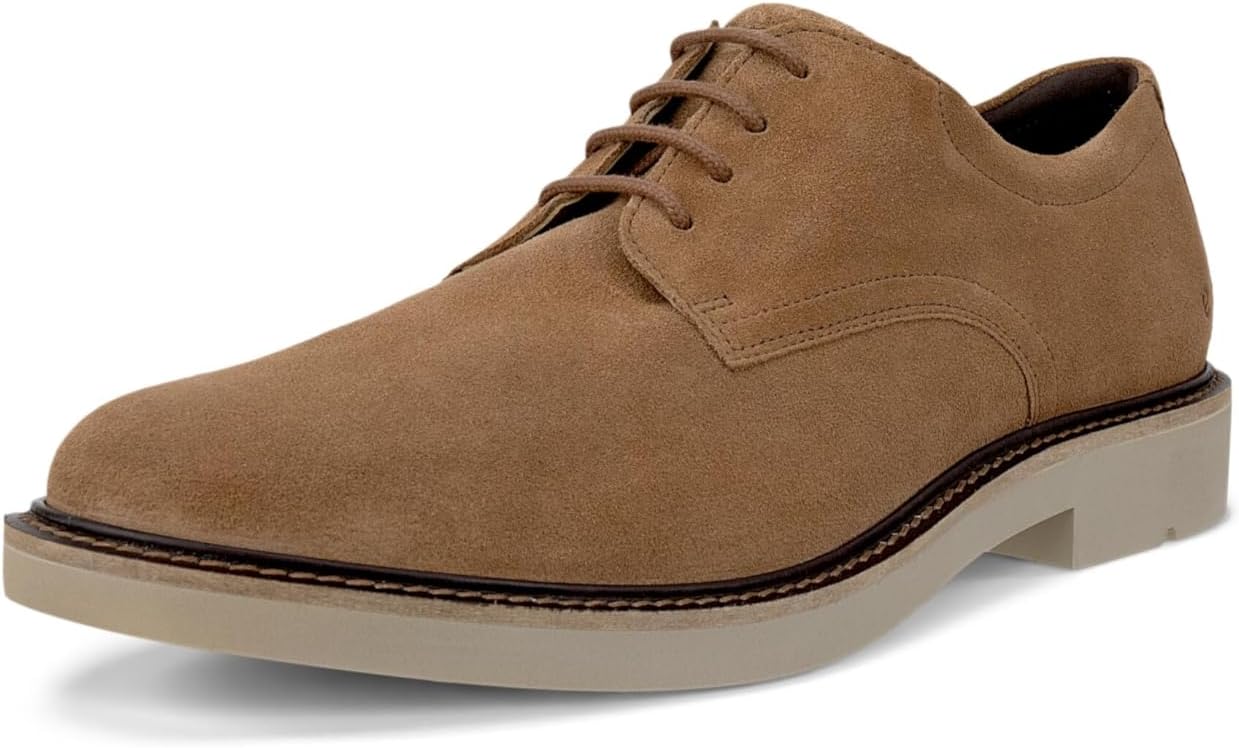
ECCO · Black
ECCO London Plain-Toe Derby
A round-toe derby profile with a removable dual-fit insole on the Amazon listing.

Clarks · Brown
Clarks Jaxen Easy Chelsea Boot
An ankle-height alternative when a low shoe feels too light for the season.
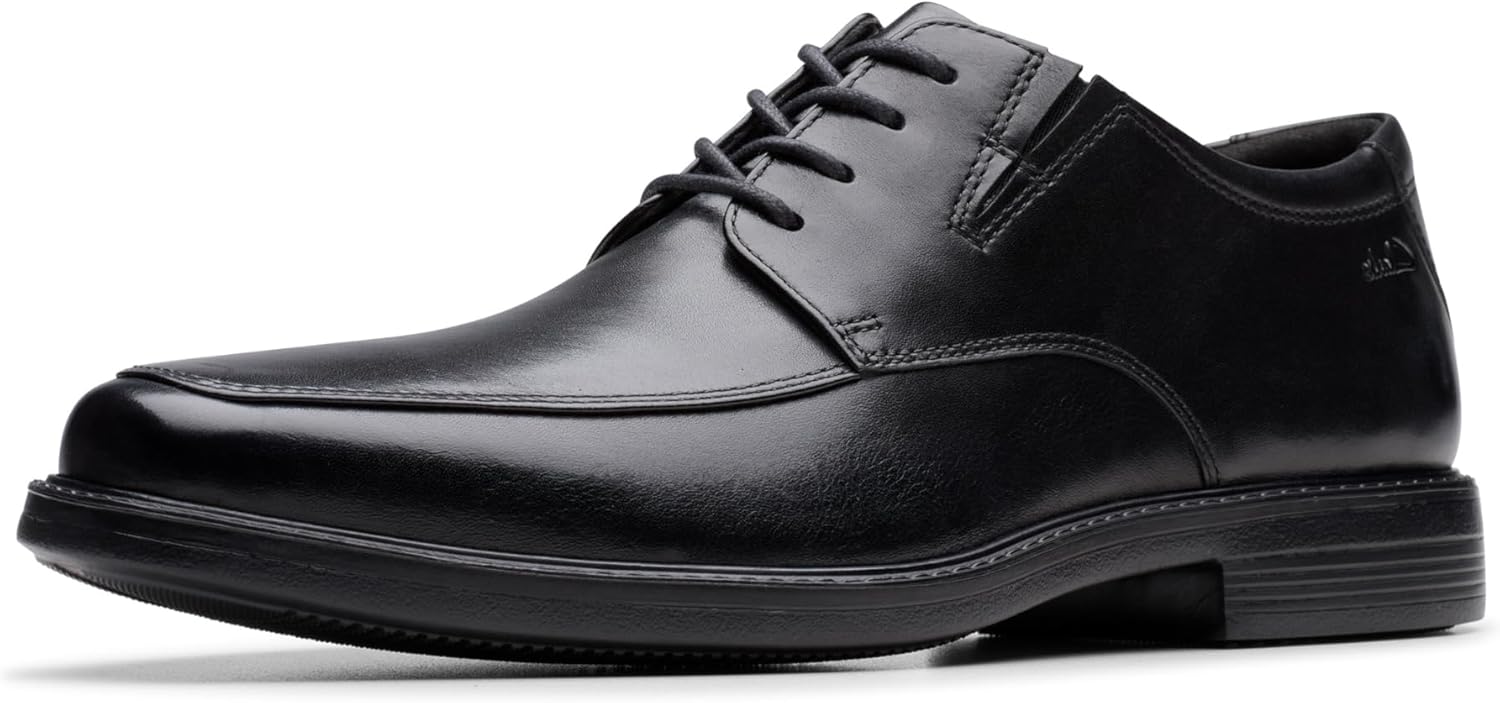
Clarks · Black leather
Clarks Cosgrove Apron Oxford
Amazon describes a premium leather upper, softly squared toe and lightweight impact-absorbing EVA sole.

Clarks · Black leather
Clarks Eastridge Low Oxford
Amazon lists a premium leather upper, stitch-down construction, lace closure, soft foam footbed, and lightweight EVA outsole.
QUICK ANSWERS
Questions shoppers ask next.
Are Oxfords bad for high insteps?
Not universally, but closed lacing offers less adjustment and may press on a prominent instep. A higher-volume Oxford last can work; otherwise a Derby is the easier starting point.
Which dress shoes have more instep room?
Open-laced Derbies and models described as high-volume or orthotic-friendly often provide more room. Removable footbeds can add depth, but exact fit varies by last.
Can lacing relieve instep pressure?
Window lacing and lighter tension over sensitive eyelets can reduce modest pressure. If the shoe must be left loose enough to destabilize the heel, the last is too shallow.
Do loafers work for high insteps?
They can, but vamp depth must match closely because loafers have little adjustment. Seek deeper models and return any pair that causes strong top pressure or cannot admit the foot comfortably.