Quick answer: Traditional dress shoes remain the clearest choice when clients, leadership, uniforms, or written policy expect conventional footwear. A leather upper on a sneaker sole does not carry the same authority as a restrained Oxford or Derby, even when a retailer calls it formal.
The workplace decides before comfort marketing does
Traditional dress shoes remain the clearest choice when clients, leadership, uniforms, or written policy expect conventional footwear. A leather upper on a sneaker sole does not carry the same authority as a restrained Oxford or Derby, even when a retailer calls it formal.
Dress sneakers make sense in relaxed offices where clean minimalist footwear is already normal. They are valuable for commutes and travel, but white midsoles, knit uppers, and athletic tread lower formality. Observe what respected colleagues wear on important days rather than only on Fridays.
1. Dress-code ceiling
A black cap-toe dress shoe can move into interviews, ceremonies, and conservative meetings. Its limit is mostly comfort or casual styling. A dress sneaker usually stops at business casual and should not be the only pair packed for an event with uncertain expectations.
Some hybrids minimize the contrast with dark soles and quiet leather uppers. Those are easier under chinos and unstructured suits than knit models such as the Bruno Marc KnitFlex. Still, a sneaker platform remains visible when seated or walking.
2. Commute and walking
Flexible foam, lower weight, and rubber traction can make dress sneakers practical for train platforms and long corridors. Cushioning helps, but it cannot correct a narrow forefoot or unstable heel. Test turns, stairs, and sustained walking rather than judging the first soft step.
Comfort-led dress shoes from ECCO, Rockport, or similar brands may bridge the gap with quieter uppers and grippy soles. Another option is commuting in walking shoes and changing at the office, which preserves the formal pair and avoids compromising an important presentation.
3. Comfort beyond softness
Sneaker-like padding often feels impressive immediately, but long-day comfort also depends on fit, flex location, torsional stability, and sufficient toe room. A thick soft sole may feel vague on stairs or compress unevenly over time.
Traditional shoes range widely. Welted leather soles can feel firm and require adaptation, while cemented or injected rubber models may be flexible from day one. Compare actual constructions and lasts instead of treating all dress shoes as rigid.
4. Professional impression
Footwear can influence how deliberate an outfit appears. A polished lace-up under tailored trousers creates continuity; a bright athletic sole introduces contrast. That distinction matters most when the wearer is presenting, interviewing, meeting clients, or representing a formal organization.
Authority does not require discomfort or luxury branding. A clean, correctly fitted, modestly priced Derby can look more credible than an expensive hybrid that conflicts with the room. Condition and appropriateness usually matter more than logo.
5. Choosing a two-shoe work rotation
Keep one restrained black or dark-brown lace-up for presentations, interviews, and formal days. Add one comfortable hybrid for travel, casual offices, and walking-heavy schedules. This gives each product a clear role and lets the uppers dry between wears.
If only one pair is possible, select the dressier option that remains comfortable for the required walking. Confirm outsole traction, selected color, and return window on Amazon, then perform an indoor commute simulation before keeping it.
CURRENT AMAZON OPTIONS
Compare each represented side on Amazon.
As an Amazon Associate, we earn from qualifying purchases. Amazon links open the exact listing so you can confirm current size, color, price, and availability.

Bruno Marc · Black
Bruno Marc KnitFlex Breeze
A breathable hybrid that reads polished without pretending to be a formal Oxford.

Bruno Marc · Black
Bruno Marc Goldman-01 Square-Toe Dress Shoes
Goldman-01 uses a square toe, lace-up closure, and smooth synthetic upper.

Bruno Marc · Black
Bruno Marc Italy Men's Oxford Dress Shoes
Plain-toe dress shoe with a breathable lining and latex insole.
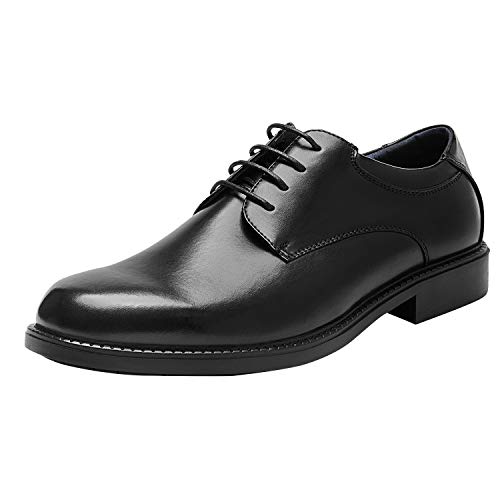
Bruno Marc · Black
Bruno Marc Men's Business Derby Lace-Up Shoes
Classic open-lacing derby with a cushioned latex insole and TPR outsole.
QUICK ANSWERS
Questions shoppers ask next.
What is the first thing to check for dress shoes vs dress sneakers for work?
Check the most formal recurring meeting and the written or observed dress code. If conventional leather shoes appear on important days, keep a true dress pair available.
Which common mistake changes the Dress Shoes vs Dress Sneakers for Work decision most often?
Equating cushioning with fit. A soft hybrid can still place the flex point incorrectly or pinch the toes, while a firmer dress shoe may fit securely all day.
How can you confirm dress code for “Dress Shoes vs Dress Sneakers for Work” before the return window closes?
Wear the pair with complete work trousers and jacket, then compare it with footwear used by trusted colleagues in client-facing situations. If the sole becomes the outfit’s focal point, it may be too casual.
What nearby office choice should you compare while deciding “Dress Shoes vs Dress Sneakers for Work”?
Compare comfort-oriented plain-toe Derbies with rubber soles. They often preserve a professional silhouette while improving traction and flexibility.