Quick answer: Remove the shoes, take out the laces, and blot standing water with a clean absorbent cloth. Opening the throat improves airflow and prevents wet laces from holding moisture against eyelets and the tongue. Lift removable footbeds only when the manufacturer permits and they separate without force.
Blot and remove laces immediately
Remove the shoes, take out the laces, and blot standing water with a clean absorbent cloth. Opening the throat improves airflow and prevents wet laces from holding moisture against eyelets and the tongue. Lift removable footbeds only when the manufacturer permits and they separate without force.
Do not rub muddy grit across the upper. Let loose debris soften, then lift it with gentle blotting or an appropriate brush once conditions allow. Treat leather, welt, sole edge, and lining as separate areas because each retains water differently.
Absorbent paper versus shoe trees
Plain, unprinted absorbent paper is useful during the wettest stage because it draws moisture from the lining and can be replaced frequently. Pack it loosely enough to preserve shape without stretching the upper. Avoid colored newspaper ink that may transfer to a pale lining.
Wooden shoe trees should generally wait until the shoes are damp rather than saturated, unless their maker advises otherwise. A tree supports shape and absorbs some moisture, but a tightly fitted tree can place stress on softened leather. Plastic travel trees shape the shoe without absorbing water.
Room-temperature airflow
Place the shoes in a ventilated room at normal temperature with space around all sides. A fan circulating room-temperature air nearby can help, but it should not blast one small area continuously. Set the shoes on an absorbent surface and change damp paper as needed.
Drying time depends on saturation, lining, sole, and humidity. The exterior may feel dry while the toe box and insole remain cool and damp. Wait until the whole shoe reaches room feel before wearing, polishing, or storing it in an enclosed box.
Why radiators and hair dryers cause damage
Concentrated heat removes moisture too quickly and can shrink, harden, or crack leather. It can also warp insoles, loosen adhesive bonds, and damage coatings. A shoe that looks dry after ten minutes beside a heater may have suffered changes that appear later.
Direct sun through a window creates similar uneven heating and can fade color. Do not use an oven, clothes dryer, heated floor, or hot car. Patience at room temperature protects both upper and construction better than any rapid drying shortcut.
Condition only after complete drying
Conditioner should be applied after the leather and lining have dried fully. Applying it to a saturated upper can trap uneven moisture and produce blotchy absorption. Use a product approved for the confirmed leather and patch test on a hidden area.
Begin with a thin layer, allow it to absorb, and brush before deciding whether more is needed. Restore color with cream polish only after the leather stabilizes. Patent, suede, nubuck, and coated materials require different care and should not receive ordinary smooth-leather conditioner by default.
Post-rain sole and lining inspection
Once dry, inspect the sole edge, heel, welt or bond line, and interior for lifting, distortion, or lingering moisture. Press gently around the outsole and listen for new separation. A smooth leather sole may need extra drying time and can remain slippery after saturation.
Smell the lining and check removable footbeds for trapped dampness before reassembly. If the upper has hardened, color has migrated, or the sole has opened, consult a cobbler before wearing. Return the pair to rotation only when structure and interior are fully dry.
CURRENT AMAZON OPTIONS
Use these as relevant comparison points.
As an Amazon Associate, we earn from qualifying purchases. Amazon links open the exact listing so you can confirm current size, color, price, and availability.

Rockport · Black
Rockport Margin Oxford
A practical plain-toe option for shoppers who prioritize familiar fit and subdued styling.

Clarks · Dark tan leather
Clarks Tilden Cap Oxford
A classic cap-toe lace-up offered by Amazon in regular and wide sizing.

Cole Haan · Burgundy
Cole Haan Pinch Tassel Loafer
A heritage tassel shape that brings personality to navy, gray, and cream trousers.
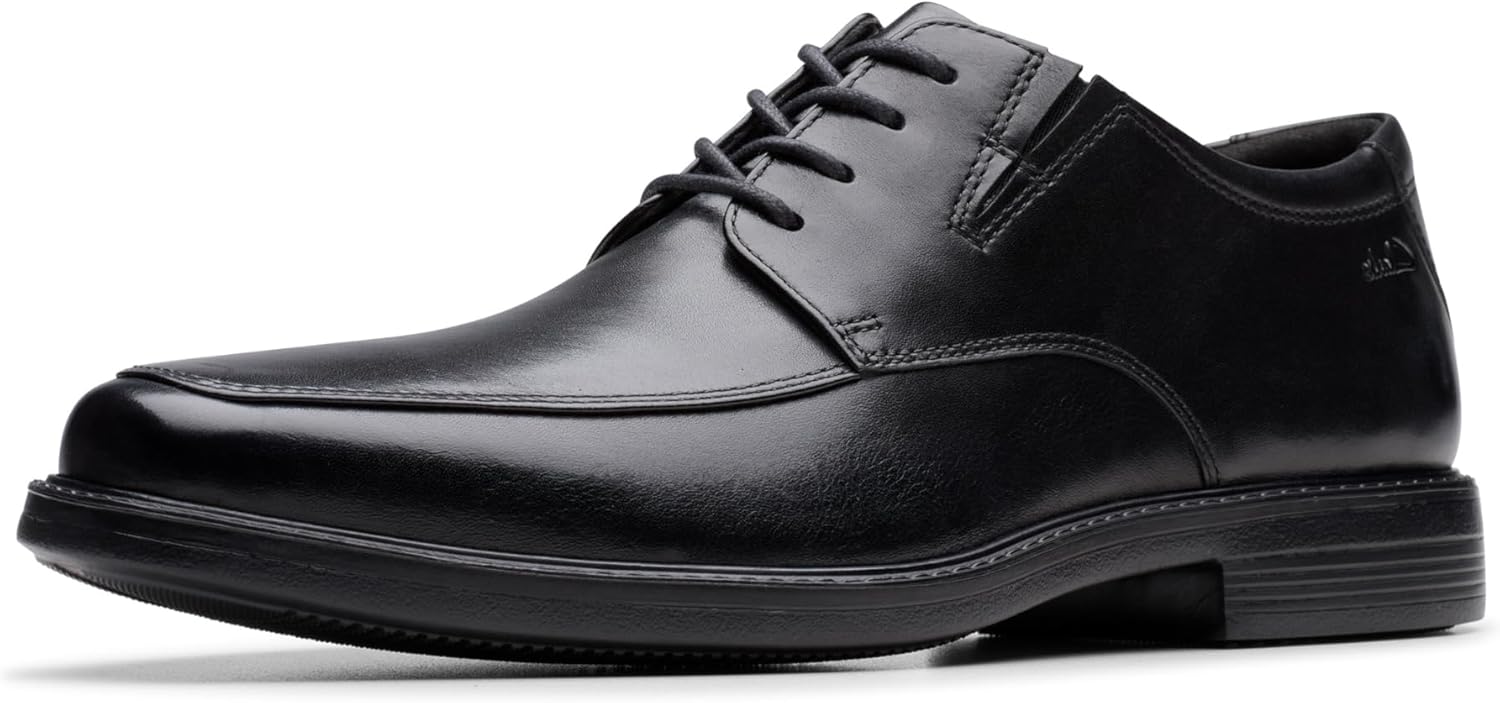
Clarks · Black leather
Clarks Cosgrove Apron Oxford
Amazon describes a premium leather upper, softly squared toe and lightweight impact-absorbing EVA sole.
QUICK ANSWERS
Questions shoppers ask next.
Can wet leather shoes be saved?
Often, especially when they are blotted promptly, shaped gently, and dried slowly away from heat. Severe saturation, salt exposure, or sole separation may require professional repair.
How long do leather dress shoes take to dry?
A damp pair may need about a day, while saturated or fully lined shoes can require longer. Judge the cool, hidden interior and footbed rather than only the dry-looking surface.
Should shoe trees go into wet shoes?
Use loosely packed absorbent paper during heavy saturation, then add correctly sized wooden trees when the shoes are damp and no longer waterlogged. Avoid forcing a tight tree into softened leather.
When should wet leather be conditioned?
Condition only after the entire shoe has dried at room temperature. Applying product while moisture remains can lead to uneven absorption and interfere with a clear assessment of damage.