Quick answer: Odor develops when moisture, skin residue, and microorganisms remain in a warm enclosed shoe. Determine whether the smell is strongest in a removable footbed, fabric lining, toe box, or storage area. A single damp insole may need different treatment from several pairs stored in a humid closet.
Identify moisture, insole or storage cause
Odor develops when moisture, skin residue, and microorganisms remain in a warm enclosed shoe. Determine whether the smell is strongest in a removable footbed, fabric lining, toe box, or storage area. A single damp insole may need different treatment from several pairs stored in a humid closet.
Check for water leaks, saturated leather, visible mold, and breakdown of foam or lining. Persistent mold or severe contamination may require professional cleaning or replacement. Masking the smell without removing moisture allows the source to continue.
Drying and rotation before deodorizing
Open the laces or straps, remove approved footbeds, and let the shoes air at room temperature after each wear. Rotation gives interior moisture time to evaporate; wearing the same pair every day keeps the lining in a cycle of partial drying. A full rest day is a useful starting point for frequently worn office shoes.
Do not place odor-prone shoes on radiators or use hot air, which can damage leather and adhesives. Room-temperature airflow is safer. If the lining remains cool or damp the next morning, extend the rest period and review sock material and foot perspiration.
Cleaning removable footbeds
Remove footbeds only when designed for removal and follow their material instructions. Some can be wiped with a barely damp cloth and mild solution, while foam, leather-covered, and orthotic inserts may require different care. Never reinstall them before both sides are completely dry.
A compressed or permanently odorous footbed may be replaceable even when the shoe remains sound. Match thickness and shape so the new insert does not crowd the toes or lift the heel. Prescribed orthotics should be cleaned according to the provider's directions rather than generic shoe advice.
Low-risk odor absorbers
Dry activated-charcoal pouches or purpose-made shoe deodorizers can absorb residual odor between wears without wetting the lining. Keep loose powders contained in a breathable sachet when possible so granules do not lodge in seams. Cedar trees may assist moisture management and contribute a fresh scent, but they are not disinfectants.
Any absorber works best after the shoe is already dry and surface residue is addressed. Replace or regenerate products according to their instructions. Strong fragrance can cover odor temporarily while making it harder to tell whether moisture remains.
What not to spray on leather linings
Avoid saturating leather linings with perfume, household disinfectant, bleach, or alcohol-heavy spray. These products can dry, discolor, or stiffen leather and may irritate skin. A spray advertised for athletic mesh is not automatically suitable for a leather-lined dress shoe.
Patch test any approved product in a hidden area and apply the minimum amount. Protect the outer upper from overspray. When the lining material is uncertain, physical drying and removable absorbers are safer first steps than an aggressive chemical treatment.
Foot hygiene and prevention schedule
Wear clean moisture-managing socks and change them after heavy sweating or long travel. Wash and dry feet thoroughly, and allow socks to dry before they enter the shoe. Persistent foot odor, itching, scaling, or skin changes may need medical or pharmacy guidance rather than shoe treatment alone.
Rotate pairs, air them after each wear, inspect insoles weekly, and clean according to actual material. Store only completely dry shoes in a ventilated area. A simple prevention routine is more effective than repeated deodorizing after odor becomes established.
CURRENT AMAZON OPTIONS
Use these as relevant comparison points.
As an Amazon Associate, we earn from qualifying purchases. Amazon links open the exact listing so you can confirm current size, color, price, and availability.
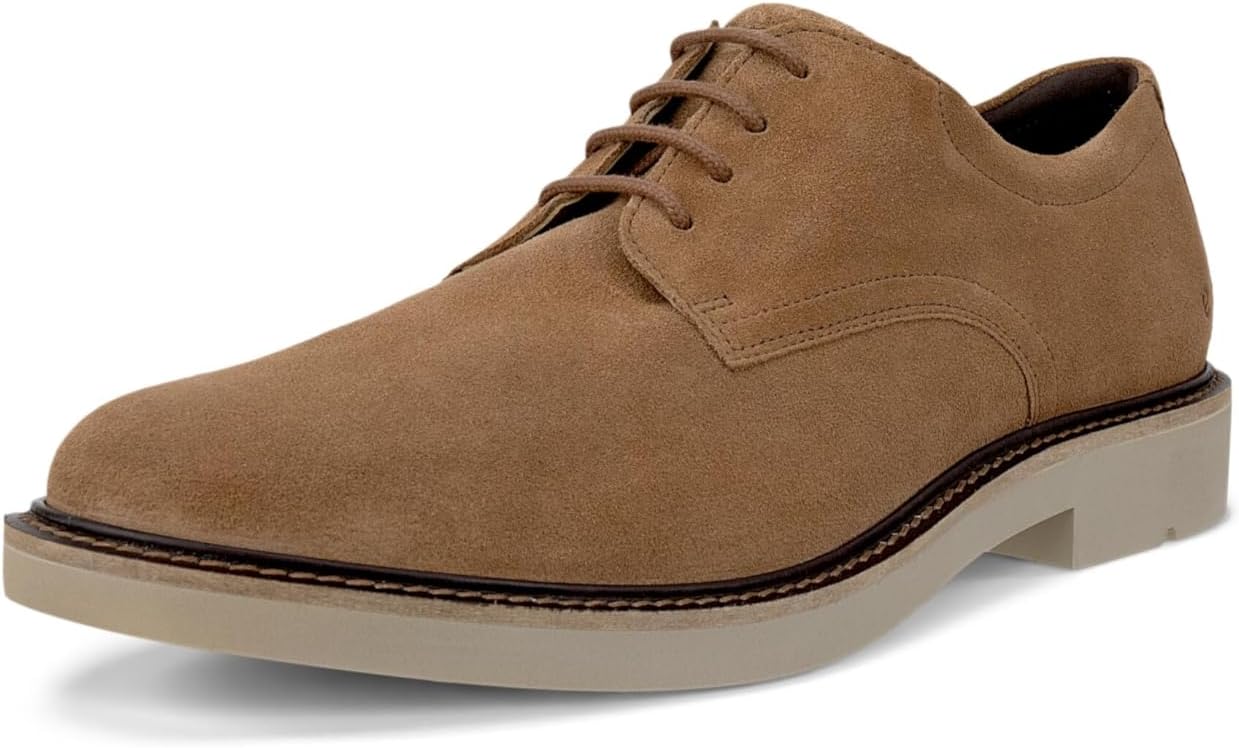
ECCO · Black
ECCO London Plain-Toe Derby
A round-toe derby profile with a removable dual-fit insole on the Amazon listing.

Bruno Marc · Black
Bruno Marc KnitFlex Breeze
A breathable hybrid that reads polished without pretending to be a formal Oxford.

Clarks · Black
Clarks Escalade Step
A restrained slip-on profile with a cushioned, work-ready direction.

ECCO · Black leather
ECCO Citytray Apron Toe Tie Oxford
Amazon lists smooth ECCO leather, leather lining, a removable inlay sole, padded collar and FLUIDFORM anatomical support.
QUICK ANSWERS
Questions shoppers ask next.
Why do dress shoes smell even with socks?
Socks reduce direct residue but still carry sweat into the lining, especially during long wear. Poor rotation, damp storage, saturated insoles, and non-breathable materials can keep that moisture trapped.
Can baking soda be used in leather shoes?
It can absorb odor, but loose powder may lodge in seams and prolonged contact may affect some finishes. A contained sachet or purpose-made absorber is easier to remove and safer to test first.
How long should dress shoes rest between wears?
A full day between frequent wears is a practical starting point, with longer rest after rain or heavy perspiration. The lining should feel completely dry rather than cool or damp before reuse.
Do cedar shoe trees reduce odor?
Cedar trees can help absorb some moisture, hold shape, and add a pleasant scent, but they do not clean contaminated linings or kill every odor source. Drying, rotation, and foot hygiene remain essential.