Quick answer: Shoe trees support the upper, help preserve the toe shape, and smooth normal flex lines while the shoe rests. They also make brushing and polishing easier by providing a firm surface. Cedar can absorb a modest amount of moisture and odor.
What shoe trees can and cannot do
Shoe trees support the upper, help preserve the toe shape, and smooth normal flex lines while the shoe rests. They also make brushing and polishing easier by providing a firm surface. Cedar can absorb a modest amount of moisture and odor.
Trees do not correct poor fit, repair cracks, or prevent every crease. They cannot replace drying time, rotation, or material-appropriate care. Excessive tension may distort the heel and opening instead of improving the shoe.
Cedar versus plastic use cases
Unfinished cedar offers useful shape support plus some moisture and odor absorption, making it well suited to regular home storage. Light sanding can refresh its aroma, but the wood should remain smooth enough not to snag lining.
Plastic trees are lighter, compact, and practical for travel. They provide shape but absorb little moisture, so shoes should air before being packed. Neither material is automatically superior if the tree fits badly.
Split-toe, full-toe and travel designs
A split-toe tree expands laterally and can fill a range of widths, while a full-toe design may follow the last more closely. The best option supports the vamp without creating pressure ridges or forcing the shoe wider.
Spring travel trees save weight but often press from toe to heel along a narrow line. Use modest tension and check the heel counter. For expensive footwear, a contoured heel and broad toe support are preferable to a hard knob.
Correct tension and sizing
A correctly sized tree enters without force, seats gently in the heel, and fills the toe enough to smooth loose folds. The shaft should compress slightly, not fully. Strong resistance indicates too much size or an incompatible shape.
After insertion, inspect the topline and heel. They should not flare outward, and seams should not appear strained. If a tree sits loose and rattles, size up or choose a shape with better width coverage.
When to insert and remove trees
Insert trees after removing the shoes, ideally once surface moisture has been wiped away. The first day of rest is most useful because the upper is recovering from heat, perspiration, and flexing.
They may remain in the shoes during storage when the fit is gentle. If only one pair of trees serves several shoes, leave them in each recently worn pair for roughly a day, then move them after the shoe has dried.
Rotation and moisture-management routine
Brush debris, loosen the laces, and let very damp shoes air briefly before inserting wood. Alternate pairs so each receives a full rest day. Dry away from heat and never seal wet shoes in a closet or travel bag.
Clean the trees occasionally and inspect them for rough edges or mildew. Shoe trees are one part of a routine that also includes correct fit, weather judgment, prompt stain care, and timely repair.
CURRENT AMAZON OPTIONS
Use these as relevant comparison points.
As an Amazon Associate, we earn from qualifying purchases. Amazon links open the exact listing so you can confirm current size, color, price, and availability.

Clarks · Dark tan leather
Clarks Tilden Cap Oxford
A classic cap-toe lace-up offered by Amazon in regular and wide sizing.

Florsheim · Cognac
Florsheim Medfield Wingtip Oxford
Decorative broguing and a warm cognac finish make this Medfield variant suitable for navy and mid-gray tailoring.

Cole Haan · Burgundy
Cole Haan Pinch Tassel Loafer
A heritage tassel shape that brings personality to navy, gray, and cream trousers.
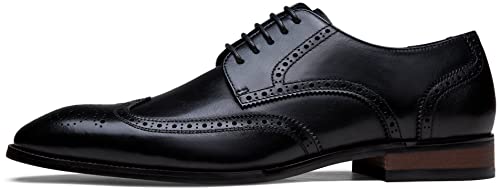
Jousen · Brown
Jousen Men's Full-Grain Leather Wingtip Oxford
Leather wingtip with brogue perforations, leather lining, and blind-eyelet lacing.
QUICK ANSWERS
Questions shoppers ask next.
Do shoe trees prevent creases?
They reduce and smooth ordinary flex creases during rest, but cannot prevent leather from bending or erase deep damage. Correct fit and rotation influence creasing just as strongly.
Are cedar shoe trees worth it?
They are useful for frequently worn leather shoes because they support shape and absorb some moisture and odor. A well-fitting plastic tree is better than an oversized cedar one.
Can shoe trees stretch dress shoes?
A properly sized tree should not meaningfully stretch the shoe. Oversized or highly tensioned trees can widen the opening, distort the heel, and strain seams.
How long should shoe trees stay in shoes?
The first twenty-four hours after wear provide the greatest benefit, and gently fitted trees may remain during storage. Very damp shoes should first air and dry naturally rather than being sealed around a tree immediately.