Quick answer: Genuine leather generally confirms that material from animal hide is present, but it is not a standardized promise of a particular grain, tannage, thickness, or durability. The phrase is often used broadly in retail. It should not be read as either a premium certification or proof that the shoe is poor.
Why genuine leather is not a precise grade
Genuine leather generally confirms that material from animal hide is present, but it is not a standardized promise of a particular grain, tannage, thickness, or durability. The phrase is often used broadly in retail. It should not be read as either a premium certification or proof that the shoe is poor.
Quality ranges from well-finished, useful leather to thin split material with heavy surface treatment. Price, appearance, and the label alone cannot locate a shoe within that range. More specific terms and physical inspection provide a stronger basis for judgment.
Split, corrected and coated possibilities
A genuine-leather upper may use split leather taken beneath the grain surface, corrected leather whose surface has been sanded and refinished, or leather beneath a substantial coating. Each can deliver consistent color and lower cost, but breathability, flex behavior, and repair options differ. The broad label does not identify which process was used.
Corrected or coated leather can resist minor marks and require simple care, which may suit occasional formal shoes. Heavy coatings may crease sharply or eventually separate from the base when abused. Look for additional material details and avoid assuming a natural surface from a smooth product image.
What the label confirms and omits
The label indicates real hide content in the described component, subject to the seller's accuracy. It does not reveal animal source, full-grain status, tanning method, finish thickness, or the quality of the cut. It also says nothing about the outsole, lining, heel, or construction method unless those are listed separately.
A product title may use genuine leather for one color while another variation uses synthetic material. Read the selected size and color specification and inspect the delivered label. When information conflicts, rely on the narrowest verifiable statement and keep return options open.
Lining and upper material distinctions
Leather upper means the exterior upper is leather; leather lining refers to the material touching the foot; leather sock may describe only the top layer of the footbed. A shoe can combine one of these with textile or synthetic components elsewhere. Consumers should not treat any single phrase as describing the whole shoe.
Lining influences moisture feel and friction, while the upper determines much of the visible creasing and care routine. Inspect composition by component when possible. A synthetic lining does not erase a leather upper, but it changes the experience and should be part of the value comparison.
Other quality evidence to inspect
Check whether both shoes have even color, straight stitching, secure eyelets, smooth internal seams, aligned heels, and a clean upper-to-sole junction. Flex the shoe gently at the ball and inspect for surface whitening or coating stress. These observations reveal assembly and finishing issues that a material label cannot.
Fit remains essential evidence because even excellent leather performs poorly on the wrong foot shape. Review width options, return terms, outsole suitability, and verified construction. A modest leather shoe that fits and serves repeated outfits can provide more value than a prestigious description attached to a painful last.
When a lower-cost leather shoe can still be useful
A lower-cost genuine-leather shoe can make sense for occasional weddings, interviews, or a first office rotation when the style is restrained and fit is correct. The owner may value familiar care and appearance without needing multiple resoles. Expectations should match frequency and conditions.
Choose a versatile color, avoid unnecessary glued ornament, and rotate the pair when worn often. Dry it away from heat and use compatible care products sparingly. Utility comes from appropriate wear and maintenance, not from defending or dismissing the genuine-leather phrase.
CURRENT AMAZON OPTIONS
Use these as relevant comparison points.
As an Amazon Associate, we earn from qualifying purchases. Amazon links open the exact listing so you can confirm current size, color, price, and availability.

Clarks · Dark tan leather
Clarks Tilden Cap Oxford
A classic cap-toe lace-up offered by Amazon in regular and wide sizing.

Stacy Adams · Black
Stacy Adams Dickinson Cap-Toe Oxford
A traditional cap-toe Oxford with a clean, formal profile and practical budget positioning.

Florsheim · Cognac
Florsheim Medfield Wingtip Oxford
Decorative broguing and a warm cognac finish make this Medfield variant suitable for navy and mid-gray tailoring.
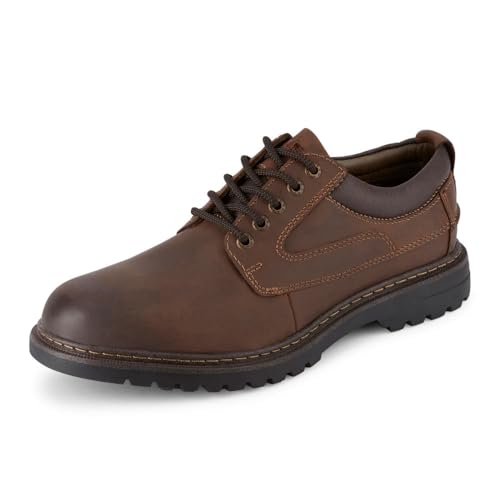
Dockers · Dark Tan
Dockers Warden Leather Oxford with Stain Defender
Leather oxford with multi-layer cushioning, rubber traction, and a stain-resistant finish.
QUICK ANSWERS
Questions shoppers ask next.
Is genuine leather real leather?
Yes, the term generally refers to material made from animal hide, but it does not specify grain layer, finish, tannage, thickness, or overall quality. Confirm which shoe component the label describes.
Is genuine leather lower quality than full grain?
It is less specific and may include corrected or split leather, while full grain names an intact grain surface. However, construction, finishing, fit, and intended use still determine whether the finished shoe is useful.
Does genuine leather peel?
Some heavily coated or split leathers can develop surface separation, but peeling is not inevitable for every shoe labeled genuine leather. Coating quality, flex stress, moisture, heat, and care affect the outcome.
How long do genuine-leather shoes last?
There is no reliable lifespan from that label alone. Wear frequency, fit, upper thickness, sole construction, moisture, rotation, and maintenance can produce outcomes ranging from short occasional use to several years.