Quick answer: The top lift is the replaceable layer touching the ground at the bottom of a dress-shoe heel. It supplies traction and absorbs abrasion so the stacked or molded structure above it does not wear directly against pavement.
What the top lift does
The top lift is the replaceable layer touching the ground at the bottom of a dress-shoe heel. It supplies traction and absorbs abrasion so the stacked or molded structure above it does not wear directly against pavement.
Many top lifts combine rubber with a harder insert. The pattern varies by manufacturer, and some molded comfort heels use a different integrated design. A cobbler can identify whether the worn component is a standard lift, a heel unit, or part of the entire outsole.
Uneven wear warning signs
Inspect both heels from behind on a level surface. One outside corner often wears first, but replacement is due when the edge becomes thin, the shoe rocks, or the wear approaches the heel stack. Exposed nails or a clicking sound deserve prompt attention.
Compare left and right shoes rather than relying on memory. A sudden change in wear pattern, instability, or pain may reflect gait or fit issues beyond routine repair. A cobbler can restore the surface, while persistent physical symptoms belong with a qualified clinician.
Why wearing into the heel stack costs more
Replacing a sacrificial top lift is usually straightforward. Once abrasion reaches stacked leather, wood-like material, or the main molded heel, the repair may require rebuilding and reshaping rather than attaching a fresh rubber layer.
Continued wear can also tilt the shoe, distort the counter, and change how the outsole contacts the ground. Early repair protects the original geometry and often costs less than waiting until the damage is visible from above.
Rubber replacement choices
Softer rubber can improve grip and dampen sound, while firmer compounds may resist wear longer. Thickness must suit the existing heel so replacing the lift does not change pitch or make one shoe higher than the other.
Ask the cobbler to explain the available compound and finish. A discreet black or brown lift preserves formality; aggressive tread may be useful for winter but look out of place on a slim evening shoe.
What a cobbler can correct
A cobbler can replace top lifts, level modest wear, secure loose components, and sometimes rebuild damaged heel stacks. The pair should be examined before the wear reaches structural layers because repair options narrow as material disappears.
The cobbler may also spot loose outsole edges, cracked welts, or counter damage during the inspection. Resoling and reheeling are separate jobs; do not assume a shoe needs a full sole simply because the rear rubber is worn.
Monthly outsole inspection habit
Turn frequently worn shoes over once a month and photograph the soles. Check heel corners, tread depth, sole thinning, separation, and exposed stitching. A dated image makes gradual changes easier to recognize.
Increase inspection frequency for commuters, heavy walkers, and people who favor one pair every day. Rotation slows wear and gives damp interiors time to dry, but it does not eliminate the need to replace a thinning top lift.
CURRENT AMAZON OPTIONS
Use these as relevant comparison points.
As an Amazon Associate, we earn from qualifying purchases. Amazon links open the exact listing so you can confirm current size, color, price, and availability.

Stacy Adams · Black
Stacy Adams Dickinson Cap-Toe Oxford
A traditional cap-toe Oxford with a clean, formal profile and practical budget positioning.

Clarks · Dark tan leather
Clarks Tilden Cap Oxford
A classic cap-toe lace-up offered by Amazon in regular and wide sizing.

Florsheim · Cognac
Florsheim Medfield Wingtip Oxford
Decorative broguing and a warm cognac finish make this Medfield variant suitable for navy and mid-gray tailoring.
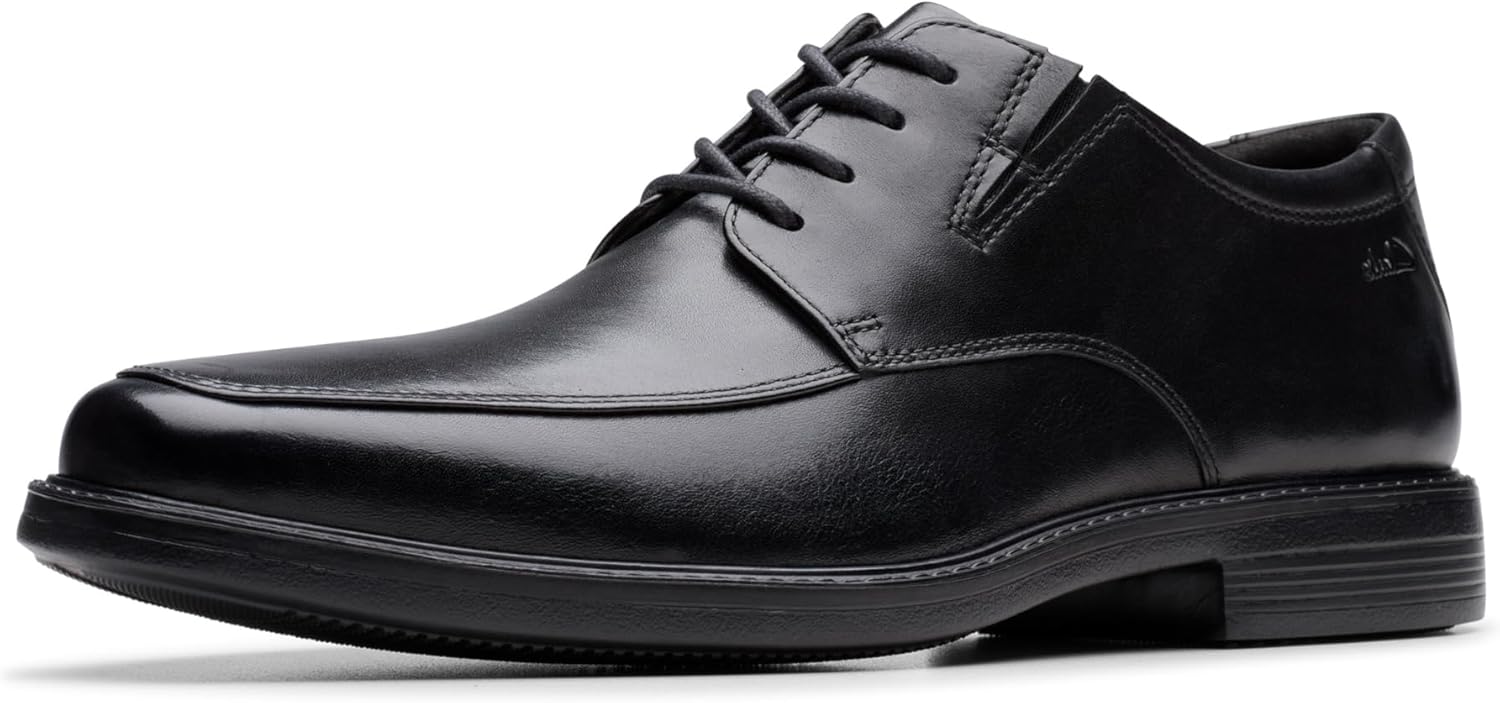
Clarks · Black leather
Clarks Cosgrove Apron Oxford
Amazon describes a premium leather upper, softly squared toe and lightweight impact-absorbing EVA sole.
QUICK ANSWERS
Questions shoppers ask next.
How long do dress-shoe heel tips last?
There is no reliable fixed interval. Body weight, gait, pavement, commute length, heel material, and rotation can change life dramatically. Replace based on visible thinning and imbalance.
Can worn heels cause foot pain?
A severely uneven heel can alter how the shoe contacts the ground and may contribute to discomfort. Repair the footwear, and seek clinical advice if pain persists or changes gait.
Can rubber heel tips be replaced?
Yes on many dress shoes. A cobbler must inspect the design because some molded soles use an integrated heel rather than a separate traditional top lift.
Is an unevenly worn heel repairable?
Often, especially when addressed before the wear enters the stack or main heel unit. Advanced damage may require rebuilding and cost more.