Quick answer: A cap toe uses a straight seam across the front of the shoe, creating a quiet division between vamp and toe. A wingtip extends that seam backward into a W-shaped wing and usually adds perforated brogue decoration. Both designs can appear on Oxford or Derby constructions, so the toe pattern does not identify the lacing style.
Wingtip and cap-toe designs are not the same thing
A cap toe uses a straight seam across the front of the shoe, creating a quiet division between vamp and toe. A wingtip extends that seam backward into a W-shaped wing and usually adds perforated brogue decoration. Both designs can appear on Oxford or Derby constructions, so the toe pattern does not identify the lacing style.
The cap toe’s restraint makes it easier to use with conservative tailoring. A wingtip brings movement and texture, which can make a plain outfit more interesting but also makes the shoe less suitable for the strictest dress codes. Neither is inherently better; they solve different visual jobs.
1. Ornament: quiet line or decorative focal point
Choose a cap toe when the shoe should support the suit without becoming the first thing people notice. The straight seam adds definition while preserving a smooth expanse of leather. Black cap toes are a dependable interview and formal-office choice; dark brown works across navy and gray tailoring.
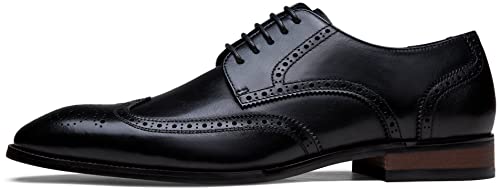
Choose a wingtip when texture belongs in the outfit. Perforations, pinked edges, and the wing shape create contrast, especially in cognac or two-tone finishes. The Florsheim Medfield shows the warmer, more expressive direction; compare it with an actual cap-toe model rather than a generic plain Oxford.
2. Versatility depends on the clothes you repeat
A dark-brown cap toe can move from a suit to chinos because its ornament is controlled. Black cap toes extend upward toward formal business wear but can feel severe with faded denim. Their versatility comes from not fighting patterned shirts, textured jackets, or narrow formal trousers.
Wingtips travel comfortably through sport coats, flannel, cords, and dark jeans. A slim dark wingtip may still work with a business suit, but a chunky longwing with heavy broguing belongs to the relaxed side. Count real outfits in the closet before calling either style more versatile.
3. Office dress codes
In traditional client-facing environments, the cap toe is the low-risk option. It communicates polish without novelty, particularly in black. A wingtip can be appropriate if coworkers routinely wear patterned tailoring, brown footwear, and softer business dress.
In business-casual offices, the wingtip often becomes easier to style because its detail bridges dress trousers and denim. Sole color matters: a white sneaker-style platform changes the message more than the wing itself. Inspect the exact variation because one model name may cover formal and casual colorways.
4. Visual weight and body proportion
A cap toe with an almond-shaped last and thin edge looks light and elongated. It suits trim tailoring and smaller-scale patterns. Square toes, thick welts, and contrast soles add weight even when the toe seam is simple.
A full wingtip can visually shorten and widen the foot, which balances heavier fabrics and broader trouser legs. On a small foot, high-contrast broguing may look busy; on a very large foot, a restrained wing can break up the expanse. View both shoes from standing distance, not only in close-up product photography.
5. Buying checks before choosing
Confirm that both comparison shoes serve the same occasion and price lane. Comparing a cushioned casual wingtip with a formal leather-soled cap toe confuses design with construction. Match color, sole profile, and upper material first, then decide how much decoration the wardrobe can carry.
Fit remains independent of the pattern. Check ball alignment, toe clearance, instep pressure, and heel control on a clean floor. Broguing will not stretch a narrow toe box, and a simple cap seam will not make an unsuitable last comfortable.
CURRENT AMAZON OPTIONS
Compare each represented side on Amazon.
As an Amazon Associate, we earn from qualifying purchases. Amazon links open the exact listing so you can confirm current size, color, price, and availability.

Florsheim · Cognac
Florsheim Medfield Wingtip Oxford
Decorative broguing and a warm cognac finish make this Medfield variant suitable for navy and mid-gray tailoring.
Jousen · Brown
Jousen Men's Full-Grain Leather Wingtip Oxford
Leather wingtip with brogue perforations, leather lining, and blind-eyelet lacing.

Stacy Adams · Black
Stacy Adams Dickinson Cap-Toe Oxford
A traditional cap-toe Oxford with a clean, formal profile and practical budget positioning.

Clarks · Dark tan leather
Clarks Tilden Cap Oxford
A classic cap-toe lace-up offered by Amazon in regular and wide sizing.
QUICK ANSWERS
Questions shoppers ask next.
What is the first thing to check for wingtip vs cap-toe shoes?
Check the most formal event the shoe must cover. A cap toe is the safer route for conservative suits and interviews; a wingtip is stronger when texture and business-casual range matter.
Which common mistake changes the Wingtip vs Cap-Toe Shoes decision most often?
Shoppers often compare toe patterns while ignoring color and sole. A slim dark wingtip may be dressier than a tan cap toe on a thick casual sole, so judge the whole shoe.
How can you confirm ornament for “Wingtip vs Cap-Toe Shoes” before the return window closes?
Place each pair under the trousers and jacket you plan to wear, then view the outfit from several feet away. If the wingtip dominates every combination, choose the quieter cap toe.
What nearby styles choice should you compare while deciding “Wingtip vs Cap-Toe Shoes”?
Compare plain-toe Derbies and semi-brogues. A plain toe is even quieter than a cap toe, while a semi-brogue adds texture without the full W-shaped wing.